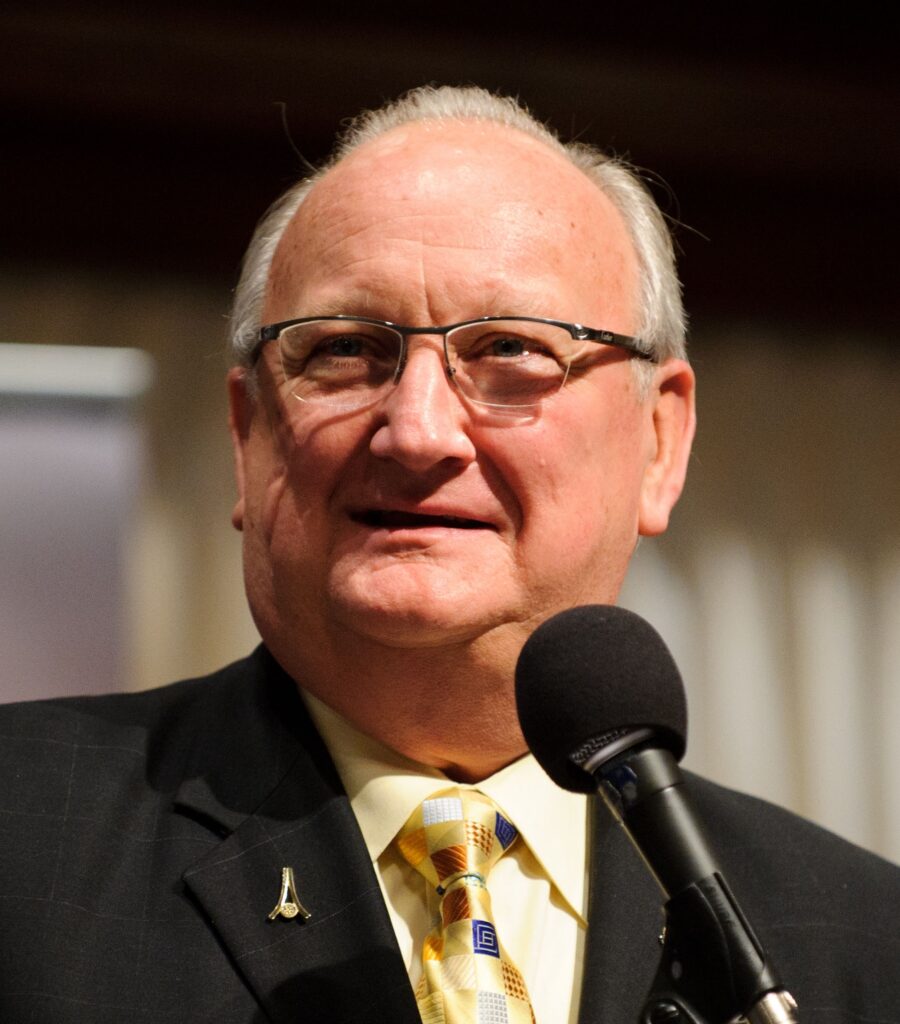
THE MINDSET OF THE AUTHOR:
I WILL ALWAYS BE A SCIENTIST-ENGINEER
Scientists continually seek the truth and build on what they know to be true. Politicians view the world through an ideological lens that often intentionally masks the truth. In light of new evidence, scientists acknowledge errors and adapt accordingly. Politicians rarely admit mistakes. Scientists work with what they know. Take the seemingly simple example of gravity. Scientists know gravity exists and how it works. They also know what they don’t know, but they do not let it hinder their ever-expanding knowledge. Scientists have debated for decades whether gravity is particle-like, wave-like, or the warping of the time-space continuum; they don’t know with certainty. Scientists continue to search for evidence to better understand gravity, but that doesn’t stop them from using what they do know. Scientists have used their knowledge of gravity to place a space vehicle at a precise point on the Martian surface and to land a man on the Moon and return, despite not yet having perfect knowledge of gravity. That is science at work.
Politicians view scientific knowledge as a resource to be manipulated to support ideology. Politicians masquerading as climate scientists insist that uncertainty in climate science prevents mankind from doing anything. Real scientists recognize that, despite what we do not yet know and significant uncertainties, they have enough knowledge to take responsible action to halt the buildup of greenhouse gases and to foresee the consequences for our planet if we fail to do so.
Seemingly, politicians lack this vision, or it is obscured by near-term ideology, economics, and the pursuit of power. Nothing in this book is driven by political interests or bias.
Donald L. Marx Sr.
As a scientist, engineer, and visionary technology planner, Donald Marx has made his mark in many fields, including engineering, aviation and aerospace, space and information technologies, cybersecurity, transportation, energy, international development, global commerce, elementary education, and the arts, and he continues to do so at age 84. He has a message for all of us: “Learn about climate change for the sake of future generations.”
Marx is a Purdue University graduate with a BS in Electrical Engineering, an MS in Systems Management from Southern California University, and extensive Air Force training in Aerospace Engineering. He rose to the pinnacle of aviation as an experimental test pilot and astronaut candidate. Enchanted with space, the new frontier, he moved to leadership roles in early commercial space technology, President Reagan’s “Star Wars” program, and information technology, where he developed some of the earliest cybersecurity patents. He has contributed to numerous technological advancements and events over the past 70 years. Marx’s scientific work has merited presentation at the National Academy of Sciences.
Importantly, his visionary leadership has been instrumental in planning the deployment of a broad range of new technologies. Although he is not a trained climate scientist, his recognized scientific and engineering achievements make him a credible resource for explaining science to laypeople. Marx draws on 800 hours of research in scientific, engineering, social, and political literature to present an unbiased, apolitical, scientifically grounded understanding of climate change and its impacts on the planet. He is critical of many misguided approaches to climate change, and his in-depth view of what mankind should be doing is farseeing.
Learn more about Marx in his book, “If I Dream It, I Can Build It.” Mr. Marx has used artificial intelligence tools to accelerate research, verify information sources, and synthesize findings presented in this book. All information extracted from news sources has been validated through other original scientific sources. Alleged scientific studies sponsored by organizations with conflicts of interest, e.g., studies paid for by the oil industry, were not taken at face value. Studies with broad, extensive peer review were given the highest value. He solicited expert opinion by opening the working draft to subject-matter experts worldwide for comment.